
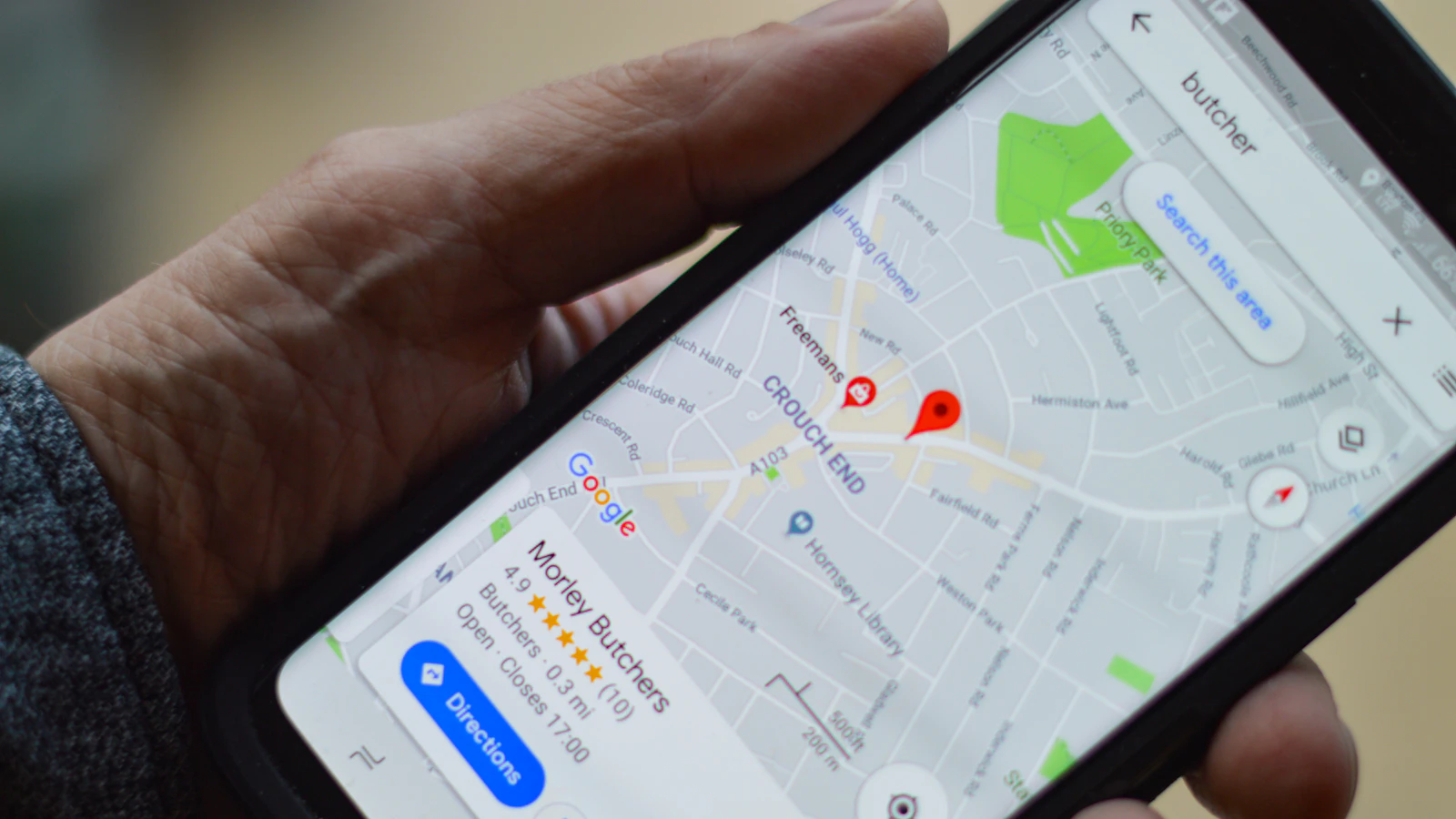
A homeowner standing in a backyard with a patch of bare lawn types something like "pool builder near me" into a phone. A map appears with three businesses on it. Most of the calls go to those three.
That small box is called the local pack, and for a builder who grew on referrals it is often a blind spot. Referrals keep the phone ringing, which is exactly why it is easy never to look at search. Until a competitor does.
How does local search decide who gets listed?
Google says plainly that local results are based mainly on three things, in its guide to improving your local ranking: relevance (how well your listing matches what was searched), distance (how far you are from the searcher) and prominence (how well known you are, including reviews and links from elsewhere).
You cannot change distance. For the other two you have real control.
What can a builder actually change?
Is the Google Business Profile complete and accurate?
Start there. Fill in the right categories, the areas you serve, your contact details and a good set of real project photos. Follow Google's guidelines for representing your business to the letter. Do not stuff keywords into the business name. It is tempting and it is how profiles get suspended.
Do I have reviews, and do I reply to them?
Prominence leans heavily on reviews. For a six-figure project, a homeowner reads them carefully. Ask after every finished job, while the result is fresh. Google's tips on getting more reviews cover how to ask well and what is not allowed.
Does my website say what I do and where?
Search engines match pages to searches. One page that says "we build pools, decks and outdoor kitchens" is weaker than a page for each service, each with a plain description, real project examples and the areas you serve. Do not copy the same page for every suburb with the name swapped. Google's spam policies describe this kind of thin, repeated page as something it acts against. Fewer, genuinely useful pages beat many empty ones.
Is my information consistent?
Name, phone number and address should match on your site, your profile and every directory. Mismatches make it harder for a search engine to trust any of them.
Is the site fast and clear on a phone?
Most of these searches happen on mobile. A slow, photo-heavy site loses the visitor before the gallery loads. Compress the images and test on a real phone.
How long does this take to work?
We will be straight about it. The foundations, such as a fixed profile, a clear site and a fixed technical problem, can show up in weeks. A strong position takes sustained work, especially links from other sites, which build slowly. On one B2B site we worked on, 39 pages were not being indexed because of one setting. Fixing it was the first step, and link building is still the main thing holding that site's grade down. SEO is patient work.
If someone promises you page one in a fortnight, ask how.
Want this checked on your own site? The free audit covers it, with no obligation.
What does a good service page look like?
Take "outdoor kitchens" as an example. A page that does its job has a clear opening sentence saying what you build and where, a few real projects with photos and a line about each, a short explanation of how the work runs, a plain note on what affects the cost, and a simple way to ask. That is it. It reads like a person explaining the service to a neighbour who is thinking of doing it.
A weak version has a heading, three adjectives and a contact button. It will lose to the strong version every time, and no technical trick fixes that.
A good page also links onward. The service page points to a project, the project points to the service, and both point to a way to get in touch. Those links help visitors as much as they help search engines.
Should I do SEO or run ads first?
Both can work. Ads reach homeowners already searching, and they start immediately and stop when you stop paying. SEO builds slowly and keeps working. We wrote a longer piece on which comes first. The short answer is that it depends on your budget, your timeline and how competitive your area is.
What should I fix first?
- Complete and verify your Google Business Profile.
- Ask your last five happy clients for a review.
- Make sure each service has its own useful page.
- Fix any site speed problems on mobile.
- Check that your details match everywhere.
Our SEO service covers this work, and the free audit will show where your site stands today. We do not guarantee a ranking. We show what is in the way, in plain English.
Frequently asked questions
Do I need a separate page for every suburb I serve?
Only where you have something genuinely useful to say about that area, such as real projects there. Copy-pasted suburb pages tend to do more harm than good.
How many reviews do I need?
There is no magic number. A steady flow of recent, genuine reviews matters more than a total.
Can I rank in a city where I have no office?
Local results favour proximity, so it is harder. Service-area pages with real local projects can help, but there are no shortcuts.
Is SEO worth it for a business that already has plenty of referrals?
Often yes, because it captures homeowners who never ask a friend. It does not replace referrals. It adds a second source.