
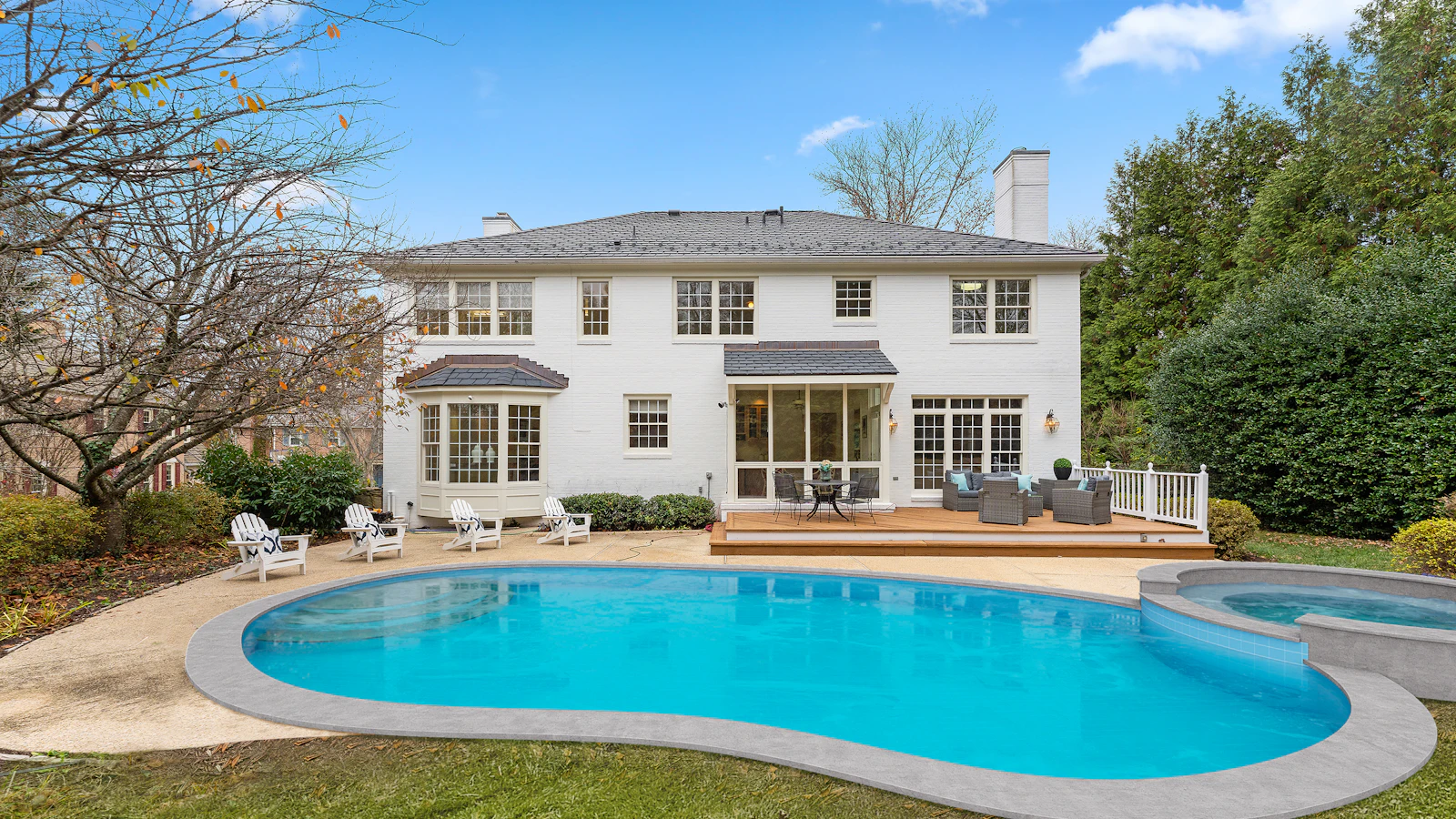
Nobody has ever said, "I would love to spend six figures digging up my garden, so I will pick whoever has the nicest stock photo of a smiling couple."
Homeowners choosing a pool, deck, pergola or outdoor kitchen builder are nervous. The job is large, it is messy, it takes weeks or months, and it happens in the one place they relax. A website for this kind of business is not there to look impressive. It is there to make a careful person feel safe enough to ask for a quote.
What is a pool builder's website actually for?
One thing: getting a qualified homeowner to start a conversation. Not to win design awards, not to list every service in the catalogue. In our experience of building sites for other businesses, a site works when it is built as a lead system and not a brochure. We built the BIS website that way, with eight solution pages and three interactive lead tools, and the principle carries across industries.
For a contractor, that means the site answers the questions a homeowner would otherwise only ask on a phone call. If they have to phone to find out the basics, many will not.
What do homeowners need to see before they ask for a quote?
From our own research into how outdoor-living contractors sell, the pattern is consistent. Four things matter most.
Real finished projects, in depth
At this ticket size, visual proof is the biggest trust signal. A handful of small or stock photos makes excellent work look unproven. Show real completed projects, grouped by what the visitor is picturing (a pool, a deck, a full backyard), with several good photos each and a short note on what the job involved.
The process, in plain words
The fear in this category is usually not the price. It is the process: will it run over budget, will the crew turn up, will I be left with a half-finished garden? A page that says plainly how a project runs, from first conversation to final walkthrough, answers that fear before the homeowner has to voice it. Most contractors run a good process and never say so.
Where you work and who you are
State your service area. Show who will actually turn up. Display your credentials where visitors can see them. Licensing and advertising rules differ from place to place, so check what applies to you locally and do not assume that a line in the footer is enough.
A low-effort way to ask
A short form with a few sensible questions (what are you thinking of building, roughly when, where) beats a blank contact box. It saves the homeowner effort and saves you from chasing the wrong enquiries.
What about video and speed?
Video is increasingly part of how homeowners judge a builder. Google publishes video best practices so that your clips can be found as well as watched. A short walkthrough of a finished project is worth more than a paragraph of adjectives.
Speed matters more than people expect. Photo-heavy sites tend to be slow, and slow pages lose visitors. Google's guidance on Largest Contentful Paint explains the measure that most often catches photo-heavy pages: how long the main image takes to appear. Compress the images properly and the gallery can still be beautiful.
Want this checked on your own site? The free audit covers it, with no obligation.
How do I make sure Google understands the site?
Use clear pages, one per service, with the town or region you serve written as plain text. Add structured data so search engines can read your business details. Google's LocalBusiness documentation explains how. And write for people first: Google's guidance on helpful, people-first content is the standard we hold our own writing to.
What mistakes do contractor sites keep making?
We keep meeting the same four:
- The photo of a pool that is not yours. Homeowners can tell. Stock images say "we have nothing to show you", loudly.
- A gallery with no context. Twelve pictures and no sentence. What was the brief? What was hard? A line or two turns a photo into evidence.
- A contact page that is a single phone number. Plenty of people would rather write than phone, especially at ten at night, which is when most people research a six-figure garden.
- Hiding the price conversation completely. You do not need a price list. A plain explanation of what moves the cost of a job tells the visitor you are not hiding something.
None of these is expensive to fix. They are mostly decisions that were never made, which is why they survive for years.
What should I fix first?
If you only have a week, in this order:
- Replace weak photos with your best real project, shot properly.
- Add one honest page about how a project runs.
- Put your service area and credentials on the homepage.
- Shorten the quote form to the questions you actually need.
- Compress your images and check the site on a phone.
We do not guarantee a number of enquiries from any of this, and nobody honest can. What we can say is that these are the gaps we look for first. The free audit checks them on your own site, and our web design service covers the build. If you are wondering what that costs, there is a pricing page with ranges, and a cost calculator.
Frequently asked questions
How many projects should I show?
Quality beats quantity. Four to six well-documented projects is stronger than thirty thin ones. Add more over time.
Do I need a blog?
Not to start. A blog helps when you have real questions to answer, such as costs, timelines and what permits involve. Start with the pages that sell.
Should I show prices?
Many homeowners want a rough idea before they call. A range with a plain explanation of what moves it builds trust. Avoid exact numbers that you cannot stand behind.
Is a one-page site enough?
For a very small operator it can be a start. Most builders do better with separate pages for each service and a proper project gallery.