
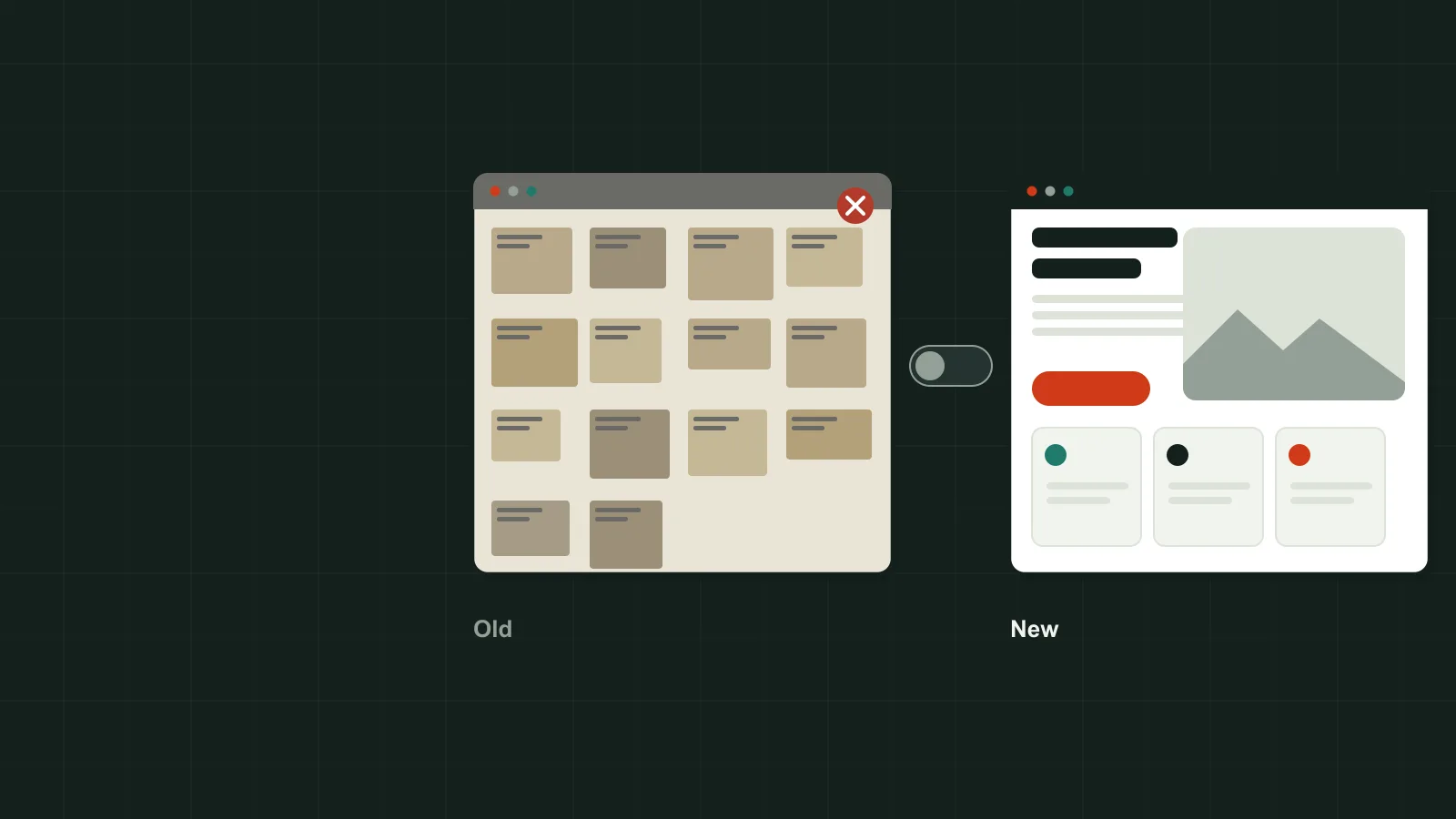
The question to ask first
Do not ask whether the site looks old. Ask whether the structure holds up. Structure is the page layout, the way pages link together, the way the site loads on a phone and the way Google reads it.
If the structure is sound, you can fix the faults in it. If the structure is the fault, every fix sits on weak ground, and you will pay for the same work twice.
Signs you should fix it
- It loads fast on a phone (Google explains what counts as fast) and passes accessibility checks.
- The problems are tags, files, headings, forms or missing pages that sit on top of working pages.
- The design still represents the business, even if it is plain.
Illustrative example. A bookkeeping firm in one of our demo projects assumed it needed a rebuild. Its site loaded in under a second and scored 100 for accessibility. Every failed check was a missing tag, file or form. The fix was done in place and added no pages.
Signs you should rebuild
- It is a fixed-width layout that shows a shrunken desktop page on a phone.
- The main image takes more than ten seconds to appear.
- Most failed checks need new structure or new content, not a repair.
- Nobody can update it, and the person who built it has gone.
A real example
When we took over one online shop, structured data was broken on most product pages, 189 URLs returned a 404 and four SEO apps were fighting over the same tags. We rebuilt on a clean foundation rather than patching, and results began showing about four weeks after the SEO work went in. Read the case study.
What to do next
Run a free audit on your site. The report separates faults you can patch from faults that need new structure, and tells you which side you are on. If the answer is a small fix, you will be told to do the small fix. If you do need a rebuild, see how we approach web design, and read what a website really costs first.